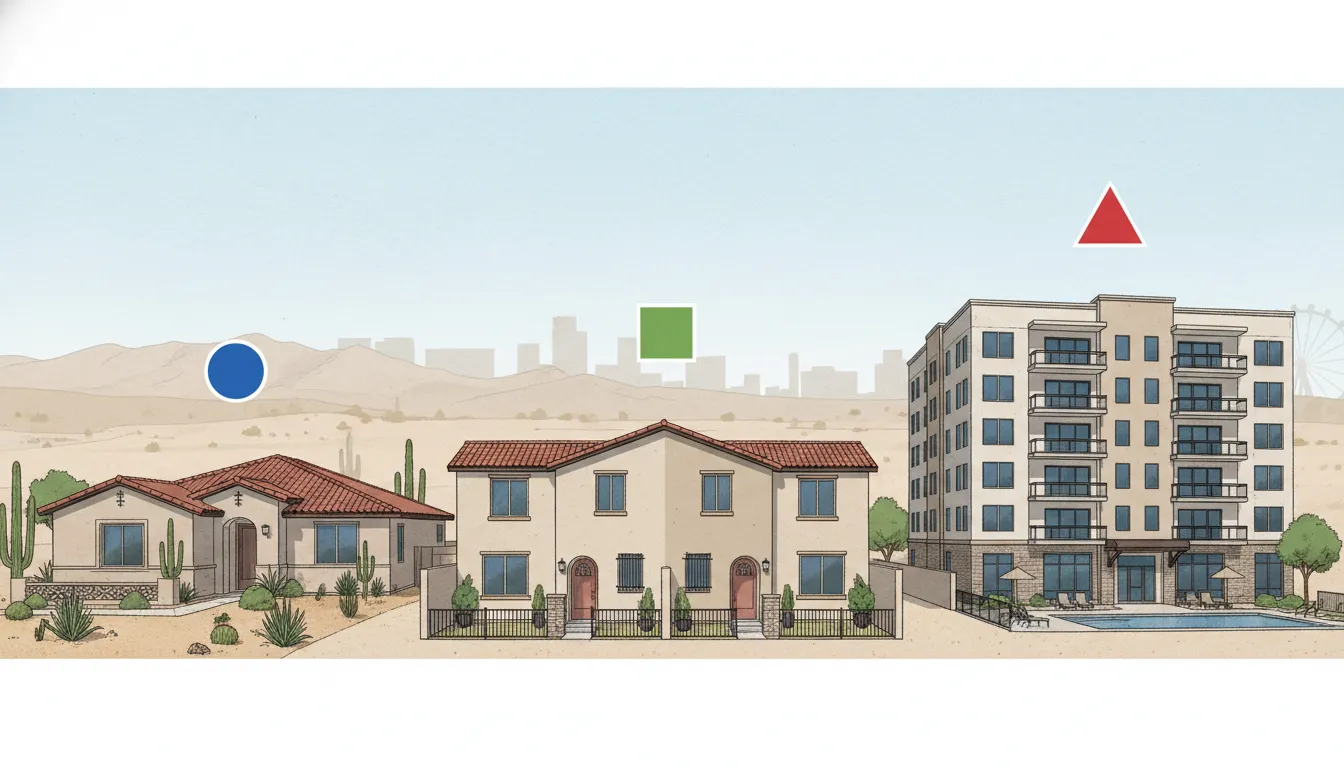
Why So Many Las Vegas Sellers Are Losing Deals Right Now

Why So Many Las Vegas Sellers Are Losing Deals Right Now

I’ve been in enough kitchen-table talks, office jawboning sessions, and late-night strategy huddles to see the pattern: sellers are walking away from solid deals because they’re focused on the wrong number. They’re fixated on the headline price instead of what actually lands in their pocket after concessions, competition, and market realities. That disconnect is costing people real money and causing stress at a time when many moves are life-driven — like being closer to family or handling medical needs.
🔍 The surprising disconnect between list price and take-home cash
Here’s the blunt truth: a full-price offer doesn’t always equal a win. Sellers are rejecting full-price offers because buyers ask for normal concessions — closing costs, interest rate buy-downs, or buyer agent contributions — and sellers are treating those requests like a personal insult. I get the sentiment: nobody wants to feel like they’re giving their equity away. But you have to look at the net proceeds, not just the sticker price.
When someone offers full price but asks for $12,000 to $18,000 in contributions, the math matters. That contribution can be less than what you’d net if you price higher and the buyer pays all costs. It can also be far more reasonable than the incentives offered on new construction down the street. Focus on "what you keep" instead of "what you see." That’s the one metric that tells you whether the deal is actually good.

🏷️ Why sellers think they have the upper hand — and why that’s risky
For months I’ve seen sellers convinced they’re still in the driver’s seat because they built equity over the years. When the market shifts down a little, that psychological cushion makes people conservative: they want a number and they won’t budge. They think, "I’m still ahead, so I’m not selling at a discount." But that ignores two realities:
- The buyer’s perspective: Many buyers now need help with closing costs or rate buy-downs to make monthly payments feasible. If a buyer legitimately needs help, they may ask for it—and that’s become common.
- The competitive landscape: New home builders are often offering incentives that overshadow modest seller concessions. Buyers compare packages, not just price tags.
Rejecting offers because buyers requested routine help is like refusing to accept a paycheck because your employer asked to withhold taxes. It’s missing the point of the transaction.

🏗️ How new construction and builder incentives are reshaping resale competition
One of the biggest pressure points I see is new construction. Builders are using incentives aggressively to move product. Here are common builder tactics right now:
- Interest rate buy-downs: Builders often buy down a buyer’s rate by a point or more. A 1-point difference can be hundreds of dollars per month — huge for affordability.
- Flex cash and closing cost packages: Some builders are offering $20,000 to $35,000 in flex cash that covers closing costs, upgrades, and sometimes extras like appliances.
- Turnkey upgrades: New homes come with included appliances, warranties, and that "zero-maintenance" appeal.
Imagine selling a two-story resale while the nearby builder offers a one-story model with an interest rate one point lower plus $35,000 in flex cash and appliances included. That comparison is brutal. Buyers weigh monthly payment and total out-of-pocket costs more than whether a house is slightly older. That’s why many resales have to either meet buyer expectations on concessions or highlight unique value that new homes don’t offer.
📊 Evidence matters: show the comps, not the feelings
I’ve watched agents print off recent sales that clearly show contributory behavior in the neighborhood: sellers were contributing $12,000 to $18,000. When sellers are confronted with the data, they often respond with overwhelm — "it’s too complicated" — or selective attention. People look at what they want to see.
That selective attention is costly. If every home in your price range is selling with a seller contribution, buyers come into offers expecting it. They’re not being greedy. They’re being rational market participants comparing apples to apples.

💡 The better question to ask: What do you actually get to keep?
It’s not what you make, it’s what you get to keep.
This is the single line that should drive decisions. When evaluating an offer, run the net proceeds numbers. Deduct commissions, closing costs, concessions, payoff amounts, and any repair credits. Don’t let a $6,000 difference in list price distract you if the net to the seller is higher after concessions. Sometimes a slightly lower list price with fewer concessions gets you further ahead. Numbers remove ego from the process.
🛠️ Practical steps for sellers who want to stop losing good deals
If you’re preparing to sell and you want to be competitive without giving away the farm, here’s a practical checklist I use and recommend:
- Run a net proceeds estimate: Calculate three outcomes — best case, expected, and conservative. Know the actual cash you’ll walk away with in each scenario.
- Study nearby sales: Look specifically for seller contribution amounts and any incentives buyers received. This is what shapes buyer expectations.
- Compare monthly payments: Work with a lender to show buyers how different buy-down scenarios affect monthly payments. If a builder’s buy-down saves a buyer $300 a month, be prepared to negotiate a modest buyer contribution to match or explain your value proposition.
- Make an honest inventory list: If your home lacks upgrades builders include, either consider a modest concession for new appliances or market the intangible advantages: lot, neighborhood, larger yard, mature landscaping, unique features.
- Preempt common requests: Offer a capped credit amount in your listing or be transparent about what you won’t include. That sets expectations and reduces last-minute surprises.
- Focus on speed when timing matters: If the buyer needs to close quickly because you are time-sensitive, find creative solutions. A slightly lower net on one deal can avoid months of relisting stress and risk.
These steps don’t mean "give away your house." They mean being informed and strategic so you don’t throw away equity out of pride or misunderstanding.

🔁 When rejecting offers makes sense — and when it doesn’t
There are legitimate reasons to reject an offer. If the buyer is clearly not qualified, if the inspection reveals major undisclosed issues, or if the contract contains unreasonable contingencies, walk away. But rejecting full-priced offers because the buyer politely asks for routine closing costs or a standard rate buy-down is often a mistake.
Ask: Is the buyer asking for an amount that materially changes your net? Are there creative ways to meet in the middle? Sometimes offering a smaller credit or splitting the difference keeps the deal alive and still gives you a meaningful profit.
📌 Example scenario: a family under pressure
Consider a real-life example I heard recently. A family had to relocate above the snow line for health reasons. They received three full-price offers, and each buyer asked for contributions to cover closing costs or buy down the rate. Instead of negotiating, the sellers rejected them because they didn't want to pay seller contributions. That decision cost them time, and possibly more money, because the market moved and every relist and delay has risk attached.
When you’re under time pressure — whether for health, family, or a job relocation — the luxury of waiting for "perfect" offers disappears. A strong agent will explain this and show the math so sellers can make an informed decision based on net proceeds and real timelines.
🧾 What agents and sellers should be doing differently
Agents need to act like financial advisors during a sale, not just transaction coordinators. That means putting the net proceeds forward, explaining buyer psychology, and contextualizing builder incentives. For sellers, the shift is to accept that market dynamics evolve. Equity is real, but it is also a moving target. Treat it like currency you can measure, not a trophy you protect at all costs.
- Agents: Bring the comps, show seller contribution trends, provide side-by-side monthly payment comparisons, and help sellers make quick, numbers-driven decisions.
- Sellers: Get comfortable with the math. Ask for a break-even analysis on concessions so you know the exact cost of walking away.
📌 Quick cheat sheet: Negotiation rules of thumb
- Never evaluate an offer by price alone. Calculate net proceeds first.
- If a buyer asks for a reasonable concession and otherwise looks solid, consider countering with a split of the concession.
- When competing with new build incentives, emphasize unique benefits or offer targeted concessions like leaving appliances or covering a specific closing cost item instead of a blanket credit.
- Time sensitivity can justify accepting slightly less if selling quickly prevents larger losses or stress.
❓Frequently Asked Questions
Why are buyers asking for seller contributions now?
Higher interest rates and tighter budgets make monthly payments more sensitive to small rate changes. Buyers often ask for closing cost help or rate buy-downs to make the mortgage payment affordable or to qualify. It is a rational response to the current affordability environment.
Is rejecting a full-price offer for concessions ever a smart move?
Yes, if the concession request would wipe out a meaningful portion of your equity or the buyer is otherwise unqualified. But if the concession is reasonable and leaves you with a healthy net, rejecting the offer can be a costly mistake.
How do new construction incentives affect resale value and competition?
Builders often bundle rate buy-downs, flex cash, and included upgrades, which lowers buyers’ monthly payments and out-of-pocket costs. Resale homes must match perceived value by offering concessions, highlighting unique features, or demonstrating long-term savings that a builder might not provide.
What numbers should a seller focus on when evaluating offers?
Focus on net proceeds: sale price minus commissions, closing costs, concessions, mortgage payoff, and repair credits. Also consider timing and the cost of holding the home if it doesn’t sell quickly.
How can sellers prepare to be competitive without overconceding?
Do your homework on nearby sales and seller contributions, present a realistic pricing strategy, get a lender to produce monthly payment comparisons, and be willing to pre-negotiate a capped credit or targeted concession to reduce last-minute surprises.
When should I walk away from an offer?
Walk away if the buyer is unqualified, inspection reveals major undisclosed defects, or the contingencies create unreasonable risk. Walk away if the concession demanded would leave you with unacceptable net proceeds after considering market and timeline realities.
⚖️ Final thought
Selling today requires both emotional intelligence and number crunching. Pride in equity is understandable, but it won’t pay the mortgage or cover relocation costs. The smarter move is to rely on data, understand buyer incentives, and evaluate offers by what actually ends up in your pocket. When you do that, your decisions become less about winning a hypothetical battle and more about closing the real transaction that moves your life forward.

If you want clarity during a sale, build your strategy around net proceeds, recent comparable contributions, and how new construction incentives stack up against your offering. That approach prevents missed opportunities and keeps your move on track when life demands it.
Categories
Recent Posts