Why Real Estate “Good News” and “Bad News” Can Both Be True in 2025 | Carpool Confessions

Why Real Estate “Good News” and “Bad News” Can Both Be True in 2025 | Carpool Confessions

📉 Why you keep seeing opposite real estate headlines
I get the confusion. One headline screams the market is collapsing. Another one the next hour says everything is booming. Both can be truthful at the same time, and that’s the trick: facts are true, but the story someone chooses to tell depends on what they want you to feel and do.
The reality is simple: data can be framed. You can use the exact same set of numbers to create alarm or to create optimism. Journalists and content creators lean into the angle that gets attention. If you are a buyer, the negative spin appeals to your hope of finding a bargain. If you are a seller, the upbeat spin reinforces your belief that your timing is great.
🔢 How statistics get bent — and still remain true
There’s an old joke: liars, damn liars, and statisticians. It’s funny because it points to a hard truth. Numbers don’t lie, but they don’t tell the whole story either. Consider two perfectly accurate headlines:
- “53% of American households saw a drop in home value last month.”
- “Average American home values have doubled over the last X years.”
Both statements can be 100 percent true. They describe different slices of time and different reference points. The first measures short-term movement; the second measures long-term growth. Which one matters depends on your frame — when you bought, how long you plan to keep the property, and whether you are liquidating now or building wealth over time.
📏 The delta matters: where you bought and where you are now
Let me make this concrete with an example I use all the time. Imagine a house bought in Las Vegas for $130,000 back in 2012 — the bottom of the market for many places. Fast-forward to today and that same house is worth about $500,000.
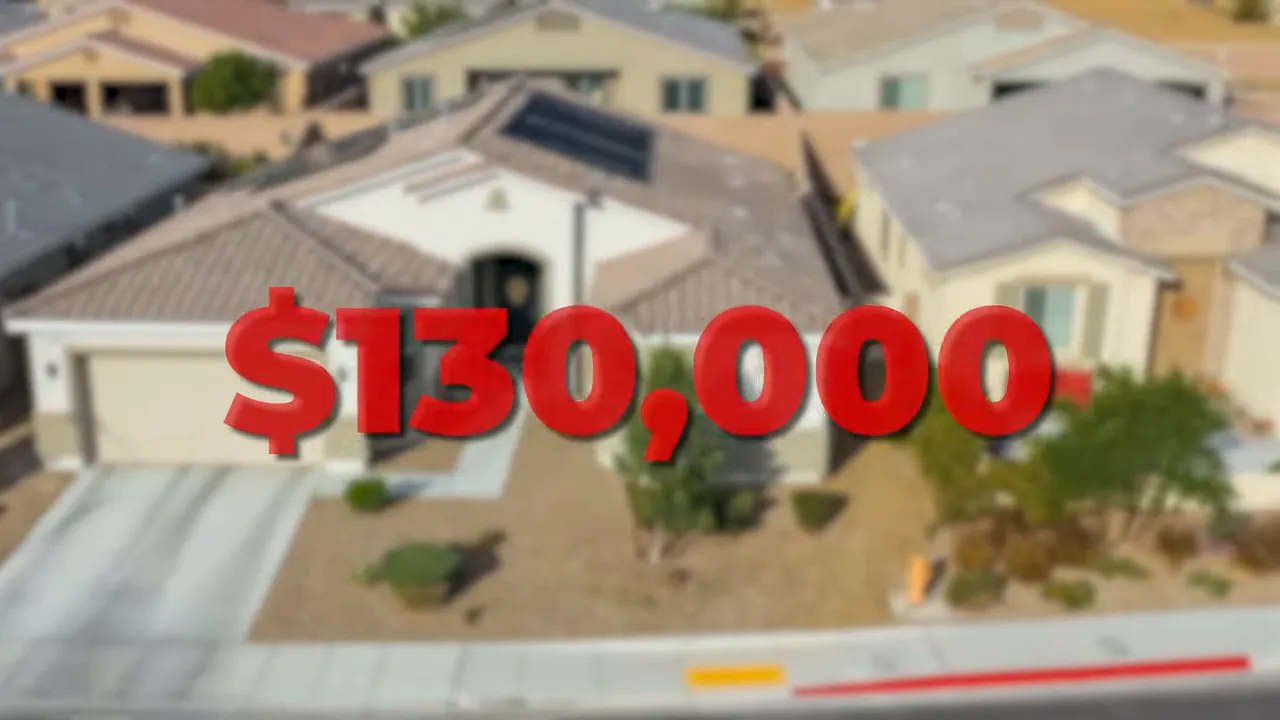
Now suppose the market pulls back and the valuation slips from $500,000 to $480,000. A headline rightly says your home “dropped” in value by $20,000. That’s technically true. But if you forget the starting point — what you paid — you miss the larger picture. You bought at $130,000; even after a $20,000 pullback you’ve still gained roughly $350,000 in equity.
Your focus changes depending on relativity. If you bought recently at a high price and the market retreats, that short-term headline stings. If you bought low and built equity over a decade, the same headline doesn’t reflect your wealth accumulation.
🏡 Tale of two houses: timing creates different winners
I once worked with two guys from my squadron who owned nearly identical houses but bought them at different times. One bought in 2010, the other in 2012. The 2012 buyer purchased at the market bottom. When both eventually considered selling, the guy who bought in 2012 walked away with a much larger gain.
The 2010 buyer was frustrated: he wanted the same profit margin the other fellow achieved. It boiled down to timing. The delta — the difference between purchase price and current worth — determines how you feel about any month-to-month swing. That delta is what matters more than whether prices moved up or down last month.
📰 Why negative headlines get all the clicks
Negative news sells. That’s real. When I post a negatively framed piece I often get more views than when I post a calm, measured update. Human beings carry cognitive biases. Buyers want a crash; sellers want a boom. Each group seeks confirmation that will justify the action they want to take.
That’s why negative content is often aimed at attracting buyers. If you can convince someone the market is softening, they’ll call to look at properties hoping to buy at a discount. Conversely, positive stories are aimed at sellers: they want to feel like now’s the time to list because demand is high.

💬 “It’s not what you make, it’s what you get to keep”
It’s not what you make, it’s what you get to keep.
That old line sums up the point. Headlines that ignore where you started and where you are now are only half the story. Equity and cash in your pocket are what count when you sell, not monthly snapshots of price movement.
🔍 Foreclosures and probates: past bargains aren’t always present bargains
A lot of people still believe you can buy foreclosures for pennies on the dollar. That was sometimes true a decade ago because of special programs and policies that pressured banks to clear distressed inventory quickly. Government programs such as HARP helped move problem loans off balance sheets, and the banks were willing to accept deep discounts.
Today the landscape is different. There are very few genuine foreclosures in most markets. When a foreclosure does show up, asset management companies and banks typically market those homes to recoup as much value as possible. The days of wholesale bargains are largely gone.
⚖️ Why probate and foreclosure strategies don’t work like they used to
Probate sales are often pitched as ways to save money. But probate law exists to settle estates fairly, and courts aim to collect the value owed to creditors and heirs. The system isn’t designed to hand steep discounts to opportunistic buyers. That expectation is rooted in old data and outdated rules.
If your business model depends on a steady stream of deeply discounted foreclosures or probate steals, you’ll be disappointed. The market, regulations, and servicing practices have evolved. Expect fewer fire-sale opportunities and more competition for legitimately priced properties.
📈 What “normal market” looks like — and why people are surprised
We’ve been living through abnormal market conditions for about two generations. Homes moved faster than seems reasonable. So when the market returns to something near historic norms people assume something’s wrong.
Example: if average days on market climb to 66 days (a normal metric historically), folks compare that to recent years where homes sold in 14 days and panic sets in. But 66 days is not a crash; 25 years ago the average could be 120 days. Perspective matters.
🧭 How sellers and buyers should orient themselves
I keep repeating the same practical guidance because it stands up: focus on your personal timeline, your purchase price, and your financial goals. Headlines won’t be tailored to your situation.
- Buyers: Don’t assume negativity equals opportunity. Run the numbers on affordability, mortgage rates, and long-term plans. If you’re buying to live in the home for many years, short-term fluctuations are less important than the quality of the purchase.
- Sellers: Price realistically. Overpricing because you believe every headline that says values will keep rising will only keep your listing stale. The market has normalized; realistic pricing wins.
- Investors: Evaluate delta and rent fundamentals. For a long-term investor, an average downturn doesn’t always equal disaster if cash flow and appreciation potential are solid.
🔧 Common myths I still hear — and what’s real
- Myth: You can still find many foreclosures selling for pennies on the dollar.
Reality: Genuine foreclosures are rare and priced to get market value, not giveaways.
- Myth: If prices dip month-to-month, you’ve lost your wealth.
Reality: Wealth is accumulated over years. The delta between purchase price and current value matters more than short-term volatility.
- Myth: Longer days on market equal a crash.
Reality: Days on market returning to historical norms is not a collapse; it’s a normalization after an unusually fast market period.
🔗 Practical checklist before you list or buy
Here are a few things I tell people to do rather than reacting to headlines.
- Look at the purchase price and calculate your equity if you’re selling.
- Check 12-month and 5-year trends rather than only the last 30 days.
- Understand local inventory and true foreclosure frequency in your market.
- Run affordability and cash-flow models if you’re an investor.
- Price to comparable sales, not to hope or fear.
🛠️ A short story about expectations and reality
I remember a buyer who insisted he would never spend more than $140,000 because his friend bought an amazing place for $120,000. That friend had bought at the market bottom in 2012. It’s tough for someone trying to buy in a stronger market to accept those prices no matter how much they wish for them.
On the flip side, sellers who bought low are often incredulous when a small monthly pullback makes buyers say the market is “crashing.” Both reactions are emotional, not analytical.
🛒 Final practical point — markets are local
National headlines are useful for broad context, but housing is local. Las Vegas trends can differ from Phoenix, and even neighborhoods within the same city behave differently. Track local supply and demand, look at comparable sales, and understand local employment drivers.

❓ Frequently asked questions
How can headlines that say prices dropped and headlines that say prices doubled both be true?
They measure different things. One is a short-term snapshot showing month-to-month movement. The other is a long-term trend comparing years. Both can be accurate; what matters is which timeframe is relevant to your situation.
If I see a report that 53 percent of homes dropped in value last month, should I panic?
No. Don’t react to a single statistic without context. Check where your purchase price sits relative to current value, examine multi-year trends, and consider your objective: selling now, buying, or holding long term.
Are foreclosures still bargains in 2025?
For the most part, no. Genuine discounted foreclosures are rare. Servicers and asset managers today seek to recover market value. Expect fewer fire-sale bargains compared with the past.
How should I price my home in a "normal" market?
Price to comparable recent sales and realistic buyer expectations. Avoid overpricing based on optimism in headlines because an overpriced listing will just sit and likely be withdrawn.
What’s the best way to decide whether to buy now?
Base the decision on affordability, mortgage rates, local market fundamentals, and how long you plan to hold the property. If you plan to live there for years, short-term swings are less important than the quality and price of the home.
✅ Closing thoughts
Numbers are tools, not narratives. You’ll see both good news and bad news about real estate because people slice the data to attract a specific audience. Instead of letting headlines drive your decisions, focus on the delta between what you paid and what the property is worth now, your timeline, and local market factors. Do that and you’ll make decisions rooted in reality rather than in someone else’s best-performing headline.
To my military brothers and sisters, you know the drill. Keep your plans in order and the lights on. If you want a clear, local read on the market, focus on facts that matter to your situation and not on the spin.
Categories
Recent Posts