How Home Loans Really Work When Buying a House

How Home Loans Really Work When Buying a House

A whole lot of people start the home buying process thinking the hard part is finding the house. Nope. A lot of times, the real confusion starts with the money.
That is where bad advice shows up fast. Internet myths. Half-true lender talk. Friends repeating something they heard 10 years ago. And before you know it, somebody thinks they need 20% down, somebody else thinks FHA is only for first-time buyers, and a veteran is getting talked out of a VA loan they absolutely should be using.
So let me clean this up in plain English.
If you are buying a house, whether that is in Las Vegas, Nevada or just about anywhere else in the country, you need to understand how financing actually works, what the common loan types are, how lenders get paid, and where people may be steering you based on their own incentives instead of your best interests.
🏠 Start here: cash or financing?
Before I even get into mortgage products, I want to say something that gets skipped way too often. Not everybody needs a loan.
Some people are selling a house in a more expensive market and moving to a less expensive one. Some are downsizing. Some are buying a final home after years of ownership. In those situations, paying cash may absolutely be on the table.
That matters because people will often ask whether you are paying cash or financing, and sometimes that question is innocent. Sometimes it is not. If someone starts nudging you toward financing when you could comfortably pay cash, it is worth asking why.
You always want to remember this: follow the money. In real estate, understanding how money flows helps you understand people’s motivations. If someone earns money only when you take a loan, that person may be more enthusiastic about loans than you need them to be.
💰 The biggest myth in home buying: you do not need 20% down
Let me knock this one out immediately.
You do not have to put 20% down to buy a house.
That is probably one of the biggest home buying myths still hanging around. Is it nice to put 20% down? Sure. If you have it and it makes sense for your situation, great. But no, it is not required.
For many buyers using a conventional loan, the typical down payment is more like 5%. Some programs can go lower, even into the 1% to 3% range depending on the lender and the program.
So why does everybody keep repeating the 20% number?
Because when you put down less than 20%, you usually have to pay PMI, which stands for private mortgage insurance.
What PMI actually is
PMI does not protect you. It protects the lender.
If you default on the loan and the lender takes a loss, PMI helps cover that risk. That is why lenders are more comfortable letting people buy with less than 20% down. You are essentially paying for an insurance layer that reduces their exposure.
That PMI payment is usually added to your monthly mortgage payment, and the amount can vary based on the size of your loan and how much you put down. Generally speaking, the more you put down, the lower the PMI cost.
Once you build enough equity, usually around 20% to 22%, you may be able to get PMI removed. But do not expect the lender to call you up out of the goodness of their heart and say, “Hey, congratulations, let’s stop charging you.”
You usually need to request it. That part matters.
- 20% down: typically no PMI
- Less than 20% down: PMI is usually required
- At 20% to 22% equity: ask your lender about removing PMI

📋 Conventional loans: the default choice for most buyers
For the majority of home buyers who are not paying cash, the loan they end up with is a conventional loan.
Why? Because for a lot of people, it is the cleanest fit. If your credit is decent, your debt-to-income ratio is workable, and you have some money for a down payment, conventional financing is often where you land.
Conventional does not automatically mean “best” for everybody. It just means it is the most common lane.
What you want to compare is not just the interest rate. You want to compare the whole picture:
- Down payment requirement
- Monthly payment
- PMI cost
- Credit score requirements
- How your debt-to-income ratio affects approval
That is why loan shopping matters, and I will come back to that in a minute.
🧾 FHA loans: not just for first-time buyers
Another myth I want to clear up is this one: FHA is not a first-time home buyer loan.
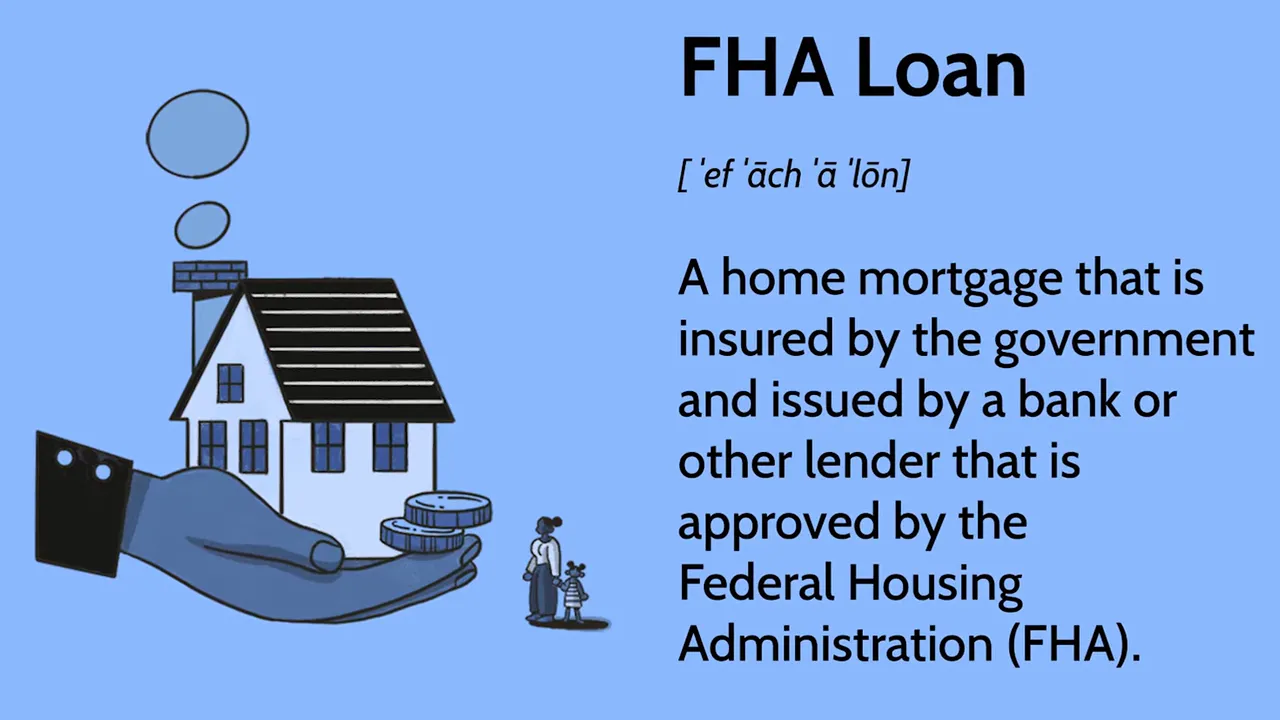
People say that all the time, but it is not true. FHA is a government-backed loan product. A lot of first-time buyers use it, yes, but that does not make it a first-time-buyer-only loan.
You can use an FHA loan even if you have owned before, depending on your circumstances and qualification.
The standard minimum down payment for FHA is 3.5%. That alone makes it appealing to many buyers. But the bigger reason FHA often helps is that it can be more forgiving on credit score and debt-to-income ratio than conventional financing.
In general, a lot of FHA borrowers are around the low 600s on credit, and in some cases lenders may go lower. But there is a catch. When lenders advertise very low score approvals, those usually come with added requirements such as a larger down payment or other compensating factors.
So if you see an ad screaming, “We do FHA down to 500,” do not just look at the number. Ask what else comes with it.
That is the difference between marketing and reality.
🇺🇸 VA loans: one of the best benefits out there, and way too underused
If you are a veteran, this section matters.
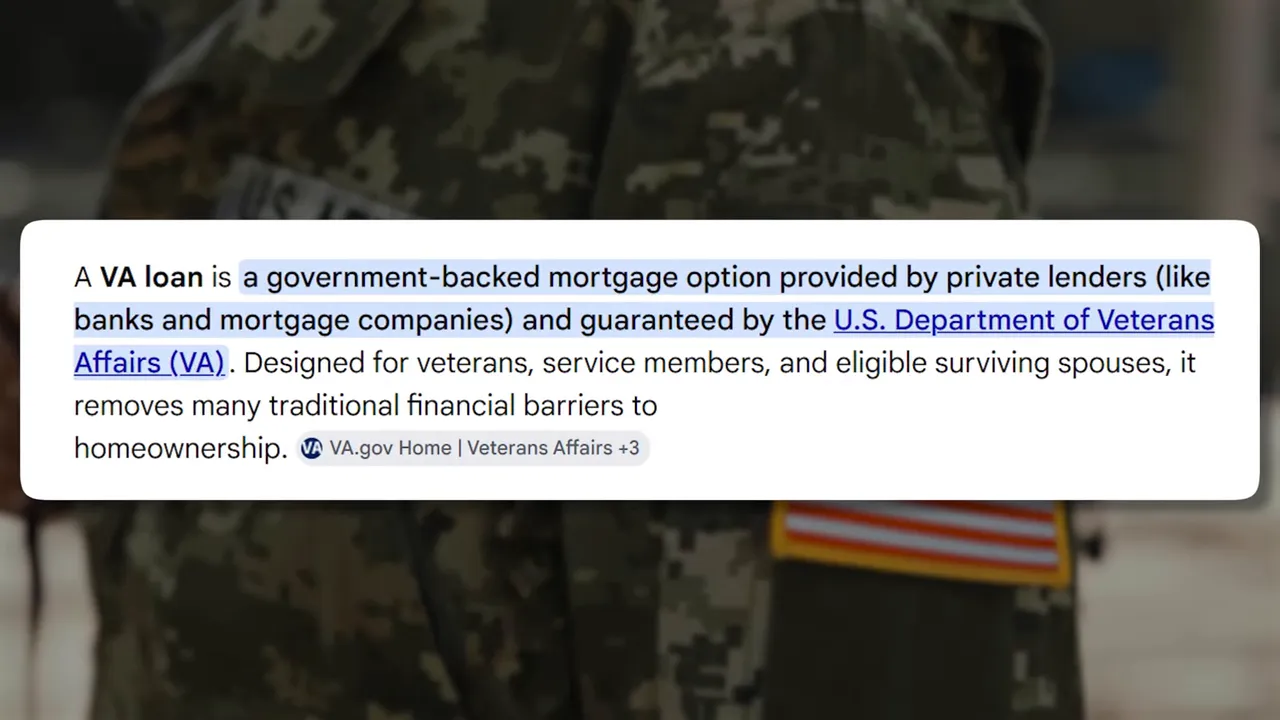
The VA loan is one of the best home buying benefits available, and it is still underused. A lot of veterans do not use it, not because it is bad, but because too many people around them either do not understand it or do not want to deal with it.
That includes some lenders and some agents.
Here is why the VA loan is so powerful:
- 0% down
- Often lower interest rates than conventional loans
- Government backing
- Potentially assumable loan terms
There is usually a VA funding fee, and for first-time use that can be around 2.15% of the loan amount. That amount is typically rolled into the loan, so you are not always bringing that cash to closing as an out-of-pocket hit.
Another very interesting feature of VA loans, and FHA loans too, is that they can be assumable. That means someone buying the home may be able to take over the existing loan, including the interest rate, if they qualify.
Think about how valuable that can be if the existing mortgage is sitting at 2.5% and current rates are much higher.
There are additional details with VA assumptions, especially around whether the person assuming the loan is also a veteran, but the bigger point is this: do not let somebody talk you out of your VA benefit just because they do not understand it.
🌾 USDA loans: the quiet zero-down option
The USDA loan does not get nearly as much attention, but it is worth mentioning because it is another 0% down option.
These loans are intended to encourage home ownership in certain rural areas. Whether it applies depends heavily on location. In some parts of the country, it can be a real option. In other places, the eligible map is so limited that it barely comes into play.
Still, if you are buying in a rural or semi-rural area, this is one to ask about.
🏦 Choosing a lender: yes, you should shop around
I want to be very direct here. You should compare lenders.
Do not let anyone scare you into thinking you must stick with the first lender you talk to. If you are shopping within the same loan type and in a normal time window, multiple credit pulls for mortgage shopping are generally not the disaster people make them out to be.
Some lenders will absolutely try to discourage you from looking elsewhere. That is because once they have you in their pipeline, they want to keep you there.
And this is where I use my car sales analogy. A salesperson will tell you the four-cylinder is perfect when that is what they are trying to move. Then two years later they will tell you nobody wants the four-cylinder and you should have bought the six. The pitch changes based on what benefits them.
Lenders can do the same thing.
So compare:
- Interest rate
- Lender fees
- Loan product fit
- Responsiveness
- Experience with your loan type, especially VA or assistance programs
Not every lender is equally strong with every program. That matters more than people realize.
🧠 Follow the money: how lenders get paid and why it matters
This is the part I wish more buyers understood from day one.
Lenders make money on loans. In general terms, they are earning off the mortgage itself. So when someone whose income depends on originating a loan tells you that borrowing is the smartest possible thing in every situation, take a breath and think.
That does not mean loans are bad. It means advice should be filtered through incentives.
If you can pay cash and that is what serves your long-term financial picture, great. If financing gives you flexibility and fits your goals better, also great. The key is that the decision should be based on your strategy, not someone else’s commission stream.
Any time someone gives you strong financial guidance in a real estate transaction, ask yourself one simple question:
How do they get paid if I do what they are suggesting?
🆕 What “first-time home buyer” really means
A lot of people hear “first-time home buyer” and think it means someone who has never owned a house before.
That is not necessarily true.
In many programs, a first-time home buyer is simply someone who has not owned a home in the last three years.
That means you could have owned a home before, even several homes, and still qualify as a first-time buyer under certain guidelines if enough time has passed.
Age is not the issue. Ownership history is.
That definition matters because people miss opportunities when they assume they are disqualified.
🎁 Down payment assistance programs: helpful, but read the fine print
Down payment assistance programs can absolutely help people buy a home sooner, but they are not magic money falling from the sky.
Most programs work in one of a few ways:
- A grant-like structure
- A forgivable second loan
- Assistance that disappears after you live in the home a certain number of years
A common setup is this: you receive assistance for part of the down payment or closing costs, and if you stay in the home for 3 to 5 years, that assistance is forgiven.
Sounds great, right? It can be. But there is usually a tradeoff.
Many assistance programs come with:
- Slightly higher interest rates
- Higher credit score requirements
- Program-specific income or occupancy rules
There are state programs, local programs, bank programs, and specialized assistance programs. They also change constantly. That is why old information floating around online can be misleading. A program that existed five years ago may still exist today, but the rules may be completely different.
📉 Credit scores: the score you see is not always the score your lender uses
This part right here causes a lot of heartbreak.
People will say, “My credit is fine, I checked it online.” Then they talk to a mortgage lender and find out the score used for lending is different from what they were looking at.
The consumer-facing scores on apps and websites can be helpful for general awareness, but they are not always the same scoring models mortgage lenders use. The difference can be significant.
That is why I always tell people to talk to a lender sooner rather than later if they are serious about buying. Not because I want anybody pressured. The opposite. I want issues found early, when they are still easy to fix.
When you wait until the last minute, even small credit problems can become giant problems.
Something inaccurate could show up right before closing. A dispute on your credit report could be handled in a way that interferes with underwriting. A collection that is not yours could turn into leverage if somebody realizes you are under time pressure.
Early is calm. Late is expensive.
If you are six months to a year out from buying, that is often the perfect time to have a lender review your credit and tell you what needs cleaning up.
🏗️ Builder incentives and preferred lenders: understand the trade
New construction buyers run into this one all the time.
Builders often offer incentives, but to get those incentives you may need to use the builder’s preferred lender. That is not automatically bad. Sometimes the deal is genuinely worth it. Sometimes it is not.
The point is to understand what is happening.
The builder wants to keep the financing inside their system when possible. Lenders want to keep the loan. Referral networks want to keep the business moving in-house. Everybody is protecting their side of the transaction.
That is why I keep coming back to the same principle: know how people are getting paid.
When you understand the incentives, you can compare the builder’s offer against outside financing and decide what really saves you money.
✅ The practical takeaway before you start house shopping
If you want to make smarter home buying decisions, here is the simple version:
- Decide whether cash is a real option for you.
- Learn the basic loan types before talking to anybody who profits from your decision.
- Do not assume 20% down is required.
- Understand PMI and know you may need to request its removal later.
- Do not confuse FHA with “first-time buyer only.”
- If you are a veteran, take VA loans seriously and do not let anyone casually talk you out of them.
- Check whether down payment assistance applies to you, but read the terms carefully.
- Talk to a real lender early so your actual mortgage credit can be reviewed.
- Shop lenders.
- Pay attention to how everyone in the deal gets paid.
Buying a house is not just about getting approved. It is about getting approved in the way that best serves you.
❓FAQ
Do I really need 20% down to buy a house?
No. Many buyers use conventional loans with around 5% down, and some programs allow even less. Putting down 20% mainly helps you avoid PMI.
What is PMI and when does it go away?
PMI is private mortgage insurance that protects the lender when you put less than 20% down. Once you have enough equity, often around 20% to 22%, you may be able to request removal of PMI from your loan.
Is an FHA loan only for first-time home buyers?
No. FHA is a government-backed loan program, not a first-time-buyer-only product. Many first-time buyers use it, but repeat buyers can use FHA too if they qualify.
Why do so many people recommend VA loans?
VA loans can offer 0% down, lower interest rates, and strong terms for eligible veterans. They are one of the best home loan benefits available, but they are often underused because too many people do not fully understand them.
Can I shop multiple lenders without ruining my credit?
Mortgage shopping within a normal window is generally expected, and buyers should compare lenders. The important part is to compare similar loan products and do it intentionally, not randomly forever.
What counts as a first-time home buyer?
For many programs, it means you have not owned a home in the last three years. It does not necessarily mean you have never owned a home before.
Are down payment assistance programs free money?
Not exactly. Some are grant-like or forgivable after you live in the home for a set period, but many come with tradeoffs such as higher interest rates or stricter credit requirements.
Why should I talk to a lender early?
Because the credit score and report used for mortgage lending may be different from what you see on consumer apps. Talking to a lender early gives you time to fix issues before they interfere with approval or closing.
The home buying process gets a lot less confusing when you strip away the fluff. Learn the loan options, understand the incentives, and do not let anybody hustle you into a decision you do not fully understand.
That is how you buy smart.
Categories
Recent Posts