Why Homes Aren’t Selling in Las Vegas and What Smart Sellers Are Doing Now

Why Homes Aren’t Selling in Las Vegas and What Smart Sellers Are Doing Now

Market snapshot 📉
I’m seeing two big trends at once: more transactions happening, but falling prices and a pileup of listings that just won’t move. On paper sales are trending up, yet month-to-month the median price for a single-family home has softened by roughly $10,000. We peaked near $485,000 and slid back to about $470,000. That doesn’t sound catastrophic until you remember there are thousands of homes sitting with no offers.
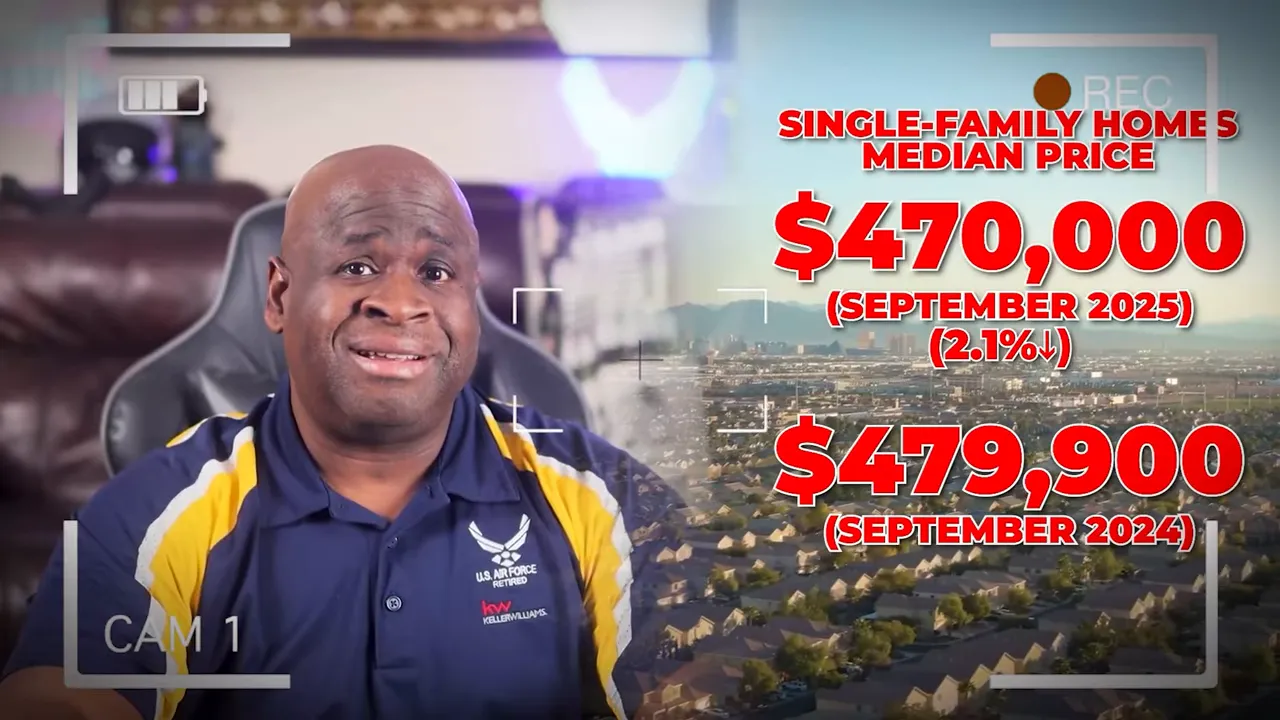
Right now roughly 7,500 homes are on the market without any traction. That number drives the anxiety agents and sellers feel across Las Vegas. Lots of folks are asking the same question: why are so many houses not selling even though activity is rising?
Buyer behavior and the zero-consequence cancellation problem 🤷
Buyers in Las Vegas behave differently today than they did five years ago. There’s almost no penalty for walking away. That means offers evaporate for reasons that would have seemed trivial a few years back — a sudden change of heart, a sneeze that somehow becomes a reason to cancel, or a financing hiccup that never gets ironed out.

That lack of buyer commitment makes sellers nervous and sometimes pushes them into defensive or unrealistic pricing strategies. When buyers know they can step away without consequences, sellers lose leverage. Smart sellers treat this reality as a signal: you’ve got to make your property irresistible from day one.
Pricing mistakes I see over and over 💸
Most homes sitting on the market share a common thread: they were priced too high out of the gate. I watch sellers interview agents and pick the one who promises the highest price, not the one who gives the most realistic plan for actually getting a contract.
- Overpricing for hope — Sellers want “what they need” rather than what the market will actually pay.
- Clinging to a past peak — Some sellers believe prices will bounce back quickly, so they sit and wait while market value drifts lower.
- Playing games — Tactics like insisting on being present for every showing or setting unreasonable terms actively kills interest.
If your money is tied up in the property and you refuse to price it to the market, you’re paying real costs for that stubbornness. Mortgage payments, utilities, opportunity cost — those add up. In a market that’s down $15,000 from its high, waiting can cost you far more than a modest price adjustment would have.
Price-cut strategy: stop nibbling and move price bands 🏷️
Small price reductions used to mean something. Today a $500 or $1,000 cut is invisible to most online search tools and to buyers who filter by price ranges. Zillow and other portals use price bands. If you stay in the same band with a token cut, you don’t attract the next pool of buyers.
When a price adjustment is necessary, it needs to be meaningful enough to move the property into the next search band or reposition it competitively. In other words: don’t nibble — shift.
- Check the most common search brackets on major portals for your area.
- Reduce the price enough to appear in the next lower band.
- Revisit marketing and showings immediately after the change; momentum matters.
Equity reality and why foreclosures are rare here 🔍
Despite the noise, most homeowners in Las Vegas still have equity. Less than 2% of those 7,500 stagnant listings are genuine short sales or foreclosures. That means the majority aren’t distressed sellers — they’re equity-rich but emotionally attached, unrealistic, or simply waiting for a better offer that may not come.
This creates buying opportunities if you are actively searching. Sellers who are panicking or who decide they need to relocate quickly can become highly motivated and accept offers below list price. But you have to approach them with the right strategy and timing — target homes that have been on the market for about 90 days with real, substantive price reductions.
Solar on the roof is not a free boost — know the terms ☀️
Solar is a great technology, but the contract matters. There’s a Zillow study that shows owned solar can add value to a home — roughly a 4 percent bump in some cases. The catch is that only paid-off, owned systems reliably add that value. If the panels are leased, financed, or tied to a PPA, they often do not increase the sales price and can in fact reduce buyer interest.

I’ve seen sellers refuse sensible advice to pay off financed solar to make their house more attractive. Two comparable houses pay off their solar and get offers. One that won’t pay it off sits and loses value as the market softens. In many cases, paying off a financed solar system before listing will net you more at closing than trying to keep every last dollar on the table.
Commissions and incentives: why they still matter 🤝
Commission structures can affect buyer agent motivation. If a seller advertises a very low buyer-side commission, a buyer’s agent may deprioritize showing that property in favor of listings that better reward their time. Think about job offers — if two opportunities appear at the same time and one pays more, which one do you pick?
That doesn’t mean sellers should automatically pay the highest commission, but understand that an artificially low buyer-side commission can reduce exposure and slow the sale. Often, a reasonable commission is an investment that helps your home get in front of the right buyers faster.
It's not what you make, it's what you get to keep.
What smart sellers are doing now ✅
Successful sellers are practical and strategic. They focus on net proceeds, market realities, and buyer psychology rather than emotional price targets. Here’s what I recommend if you want to be among the sellers who get deals done.
- Price to the market, not to your needs. Interview agents for strategy, not just a price. Ask about comparable homes that actually sold, days on market, and inbound buyer traffic.
- Eliminate friction. Pay off problematic financing arrangements like financed solar where it makes sense. Remove barriers to buyer financing and inspections whenever you can without exposing yourself to undue risk.
- Make bold price moves. When you cut, move into the next search band. Small cuts that don’t change search visibility produce no meaningful bump in activity.
- Be realistic on terms. Overly restrictive terms or trying to micromanage showings will drive buyers away. Provide access and be flexible with timelines when appropriate.
- Watch the calendar. If a property has been on market for 90 days with no price action, strongly consider switching course or pivoting your strategy.
Practical checklist for sellers preparing to list 🛠️
Before you go live, run through this short checklist to avoid common pitfalls that slow sales.
- Obtain a realistic market analysis that factors recent reductions and days on market.
- Decide whether paying off financed appliances or solar increases buyer interest enough to justify the outlay.
- Set a launch price that looks good in online search bands and to the average buyer in your segment.
- Prepare flexible showing rules; remove as much friction as possible for buyer tours.
- Design a marketing refresh to follow any price move so momentum doesn’t die the day after a cut.
- Know your walk-away number and be prepared to act quickly when a solid offer appears.

Final thoughts 🔔
I deal with people who are nervous, hopeful, stubborn, and bright — often all in the same conversation. The market’s message is clear: adapt or sit on the sidelines and pay invisible costs. For most sellers, the smartest move is to price realistically, remove barriers that repel buyers, and be willing to make meaningful adjustments rather than symbolic ones.
If you remember one thing it’s this: think in terms of net proceeds. A slightly lower sales price with a fast close and minimal carrying costs often beats a stubborn price that fades while the market shifts under your feet.
Frequently Asked Questions ❓
Why are so many houses sitting unsold even though sales have increased?
Because sales volume can rise while prices cool and inventory accumulates. Many sellers are still pricing for the peak, creating a mismatch between list price and what buyers will pay. Add buyer cancellations and a lack of real incentives for buyer agents, and you get a lot of homes with no offers.
How big should a price cut be to matter?
A price cut should be big enough to move the home into the next online search band or to change the property’s position against competitors. Small reductions of a few hundred or a few thousand dollars inside the same band rarely change visibility or buyer perception.
Does solar always increase my home’s value?
No. Only owned solar systems typically correlate with a value increase. Leased, financed, or PPA solar arrangements often do not add market value and can reduce buyer interest. In some cases paying off the solar arrangement before listing improves marketability and net proceeds.
Should I reduce the buyer’s agent commission to save money?
Cutting the buyer-side commission to save a little can backfire by discouraging buyer agents from showing your property. Think of commission as an incentive to get more eyes on your home. A balanced commission often delivers a faster sale and better net results.
How long should I wait before changing strategy on a stagnant listing?
If a property is at or past the 90-day mark with no meaningful price drops or offers, it’s time to change strategy. That could mean a meaningful price reduction to the next band, paying off problem items like financed solar, improving marketing, or altering showing rules.
Categories
Recent Posts